
The Biden coalition was always fragile.

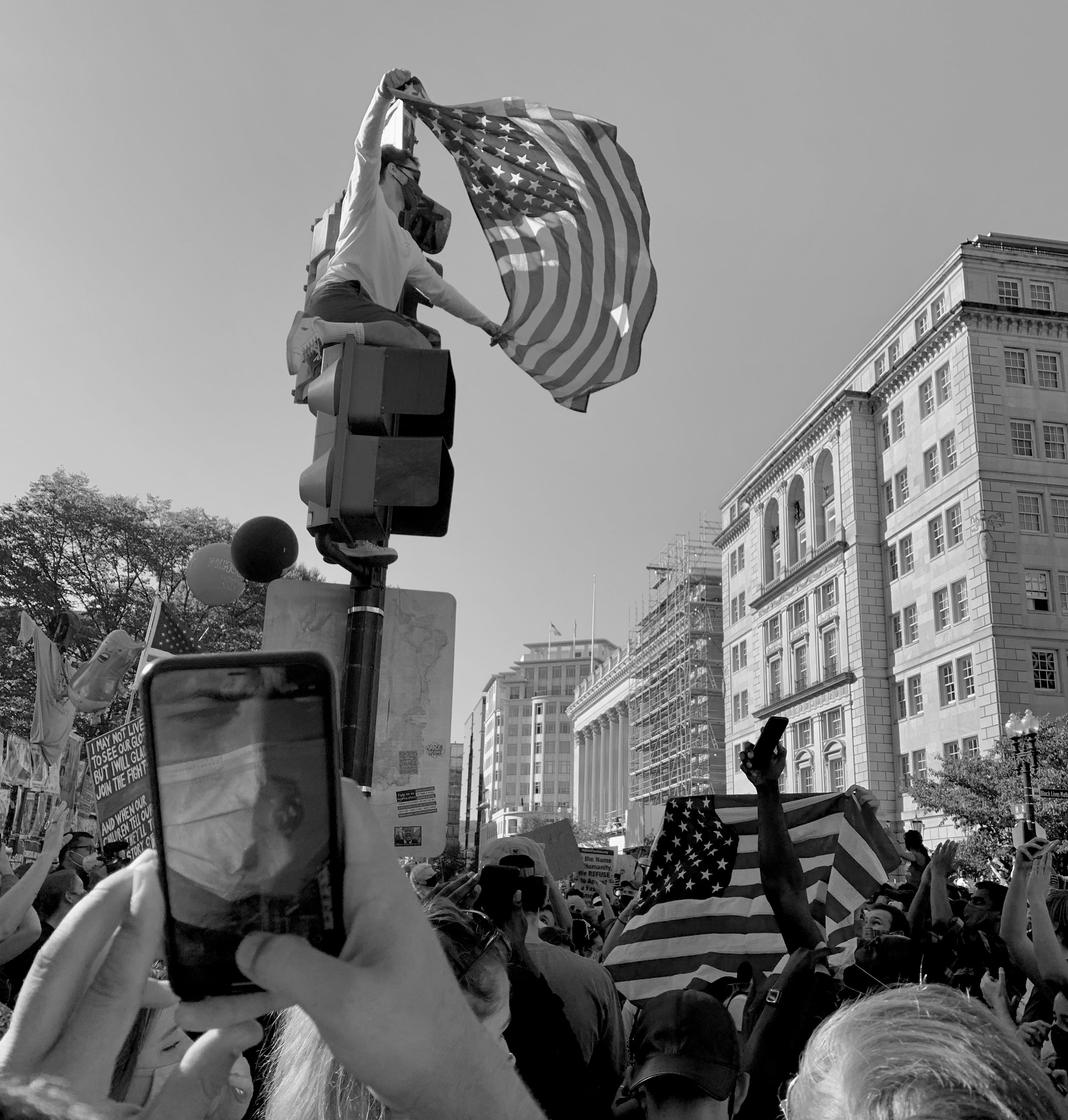
The Democratic Party has always been an unstable coalition of competing interests: corporate lobbyists and trade unions, LGBTQ Americans and older socially conservative Black Americans, civil rights activists and segregationists. Opposition to the Republican Party was the unifying force throughout the different eras of American politics, but that unification has begun to fray.
In the run-up to the 2020 election, liberal party loyalists were riding high on anti-Trump sentiment from the previous four years. Opposing Trump had become their entire political ideology. In a political crisis like the one witnessed in 2020, opposition to Trump was a unifying rallying cry for the broad American left, even if that opposition was directed at different aspects of his administration.
Older liberals were mostly opposed to Trump’s aesthetic: his loudness, abrasiveness, and Russiagate. This helped re-engage a base that had just suffered a demoralizing loss in 2016, but it did little to expand the coalition. The events of 2020, however, would do that for them.
In 2020, COVID-19, economic anxiety, police brutality, and climate change fueled the political momentum that rallied younger liberals behind Biden and the Democratic Party. Their motivation was less about pure opposition to Trump and more about concrete political values, which they saw Trump as being directly opposed to. These factors brought the two competing groups into the same camp, and the Democratic Party welcomed their support, even if they weren’t committed to the same political goals.
This fracturing began almost immediately. In the days after the 2020 election, the popular party consensus was that Biden just needed to “unify” the country and get everyone “back to normal.” Gone were the existential talking points about radically changing the system, replaced with messages of compromise. The $15 minimum wage was the first major party policy to be unilaterally abandoned—a policy that Democrats had made one of their main promises in the Georgia Senate runoffs. It was also a policy that would have disproportionately affected younger Americans anxious about reentering the workforce post-COVID.
The version of Build Back Better (BBB) that eventually passed was a skeleton of what was campaigned on in 2020. No minimum wage increase, no free community college, no free childcare, no affordable housing, and so on. The animating issues of economic anxiety that motivated younger Americans were left unresolved, just as inflation began ramping up for the first time in their lives.
The George Floyd Justice in Policing Act was also abandoned, and climate change legislation was watered down to green energy tax credits with no real emission reduction goals. For older party loyalists, this hardly mattered, as beating Trump had been their sole political goal. What happened during the administration was irrelevant to their lives. These societal issues could remain unchanged, yet they could act as if those issues were resolved.
This is where the coalition began to diverge. Trust in the administration was irreparably damaged during this early period, well before October 7, 2023. However, this early period of legislative failure exacerbated the distrust younger liberals and leftists would eventually feel toward the Biden administration.
While the focus is often on 2023 to the present when discussing young people moving away from the party or feeling less aligned with its goals, the story of the Biden era can not be told without starting at the beginning. The signs were there; their goals and priorities were made obvious early on.
It's tough to imagine any national level Democratic nominee ever reigniting the base again unless they're adamantly progressive or a complete outsider. You explained it well and it's why the party's future seems fucked beyond repair.